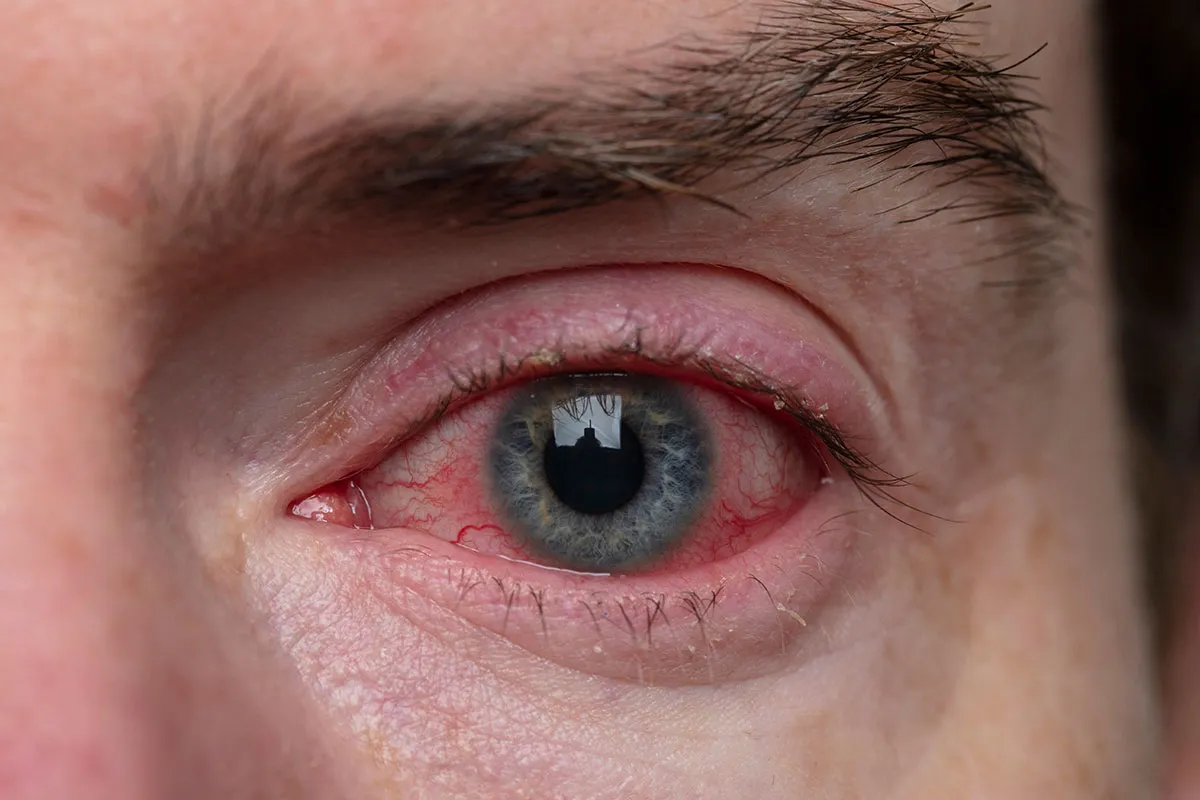
Conjunctivitis is inflammation or infection of the surface of the eye and inner eyelid. Symptoms can affect one or both eyes and may vary depending on the cause.
Viral conjunctivitis is the most common type. Symptoms usually include a red or pink eye, watery discharge, irritation, and a gritty or burning sensation. The eye may feel sticky on waking, and symptoms often start in one eye before spreading to the other. Viral conjunctivitis is commonly associated with cold or flu-like symptoms and is contagious.
Bacterial conjunctivitis often causes a red eye with thicker yellow or white discharge. The eye may be stuck closed on waking due to the discharge. Mild swelling of the eyelids may occur. Bacterial conjunctivitis is also contagious, but many cases are mild and self-limiting.
Allergic conjunctivitis is caused by an allergic reaction rather than infection. Symptoms usually affect both eyes and commonly include intense itching, redness, watery or stringy discharge, and mild eyelid swelling. Allergic conjunctivitis is often associated with hay fever symptoms such as sneezing or a runny nose and is not contagious.
Vision is usually not affected with conjunctivitis, although it may feel blurred temporarily due to discharge.
Symptoms such as significant eye pain, sensitivity to light, changes in vision, or symptoms affecting contact lens wearers are not typical of conjunctivitis and require urgent medical assessment.
Treatment for conjunctivitis depends on the underlying cause and the severity of symptoms. Many cases are mild and improve with simple supportive care.
Viral Conjunctivitis is the most common type and usually clears on its own within a few days to a week. Treatment focuses on relieving symptoms. Lubricating eye drops can help soothe irritation, dryness and grittiness. Cool compresses may also provide comfort. Antibiotics are not effective for viral infections.
Bacterial conjunctivitis may cause thicker yellow or white discharge. Many mild cases resolve without antibiotics. In some cases, antibiotic eye drops or ointment may be appropriate. Our pharmacists will assess symptoms and advise whether treatment is suitable under the Common Conditions Service.
Allergic conjunctivitis is treated by reducing the allergic response rather than treating infection. Treatment may include appropriate eye drops to relieve itching, redness and watering, as well as managing underlying allergy symptoms. Avoiding known triggers can also help reduce flare-ups.
Regardless of the cause, treatment works best when used correctly and consistently. Our pharmacists will advise on the most appropriate option and how to use it safely.
Good hygiene and simple self-care measures are important in helping symptoms settle and in reducing the spread of conjunctivitis.
Hands should be washed regularly with warm soapy water, particularly before and after touching the eyes or applying eye drops or ointment. Eyes should be cleaned gently if discharge builds up, using clean cotton wool or tissues and warm water. A separate piece of cotton should be used for each eye to avoid spreading infection.
Avoid rubbing your eyes, sharing towels, pillows, face cloths, or eye cosmetics, and do not wear eye make-up until symptoms have completely resolved. Contact lenses should not be worn while symptoms are present and should only be restarted once the infection has fully cleared.
Lubricating eye drops may help soothe irritation and dryness. Any eye treatment should be used exactly as advised.
Children who are otherwise well can usually continue attending school or childcare, but good hygiene should be encouraged and the setting informed.
You should make an appointment with your GP if symptoms worsen, do not improve within 48 hours of starting treatment.