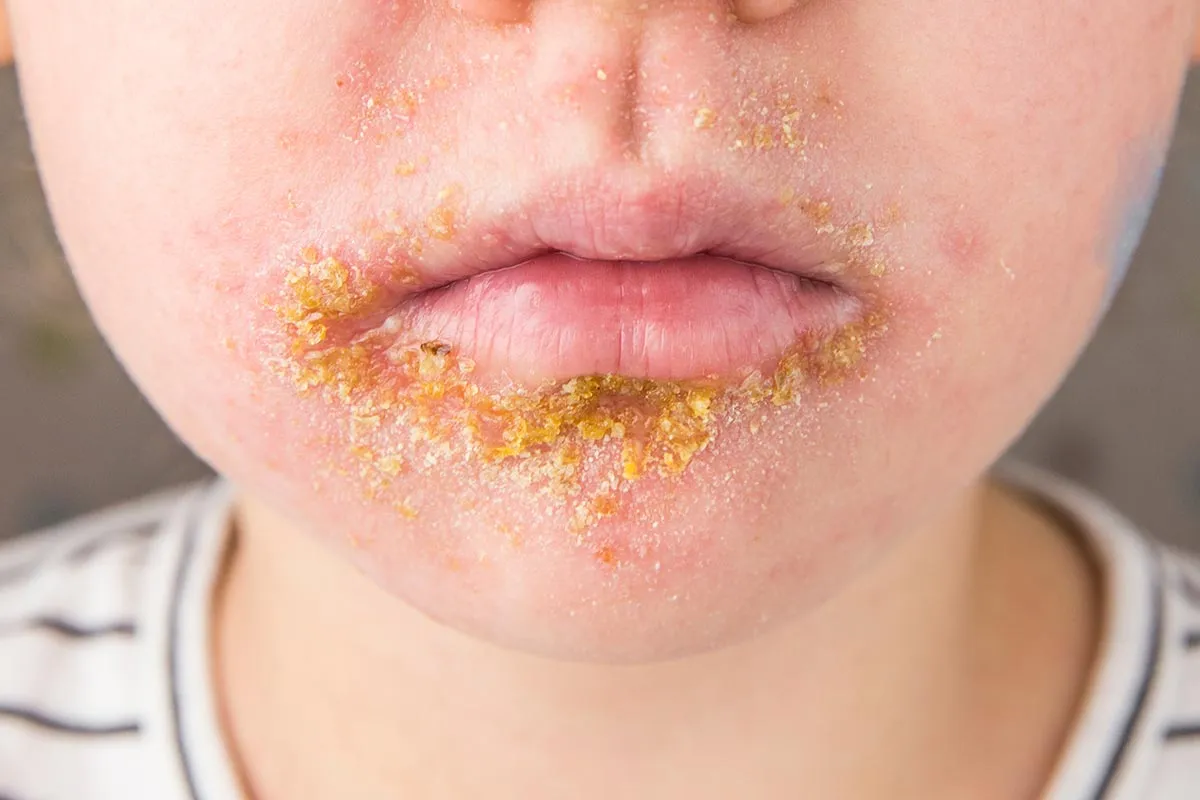
Impetigo is a common and highly contagious bacterial skin infection, particularly in young children, but it can affect adults too. It often starts as small red patches on the skin, most commonly around the nose and mouth, but it can also appear on the arms, legs, or other areas. These patches can develop into small fluid-filled blisters which burst and form thick, golden or honey-coloured crusts.
Once the crusts dry, they leave a red mark which usually disappears within a few days or weeks, without leaving a scar. The areas are usually not painful, but they can be itchy. In some cases, especially if the infection is more severe, swollen glands or a mild fever may occur.
Impetigo is highly contagious and can spread to other parts of the body or other people. It stops being contagious 24 hours after starting using the prescribed treatment or when the patches dry out and crust over. If lesions are not yet healed after 24 hours of treatment, then they should be covered.
Treatment depends on how widespread the infection is and the age of the person affected. Under the Common Conditions Service, our pharmacists can assess and treat adults and children aged 2 months and over with small, localised areas of non-bullous impetigo. Treatment usually involves a prescription for a topical antibiotic cream or ointment which is applied every 8 hours .
Before applying treatment, any crusts should be gently softened with petroleum jelly (Vaseline) and removed with a warm facecloth to help the cream work effectively. Facecloths should not be shared or reused and should be washed at a high temperature after use.
If the infection is more extensive, involves 4 or more blisters, keeps recurring, affects very young infants, or shows signs of spreading or worsening, referral to a GP is required for further assessment and possible oral antibiotics.
Good hygiene is very important to help the skin heal and to prevent impetigo spreading to others. The affected area should be kept clean and dry, and hands should be washed thoroughly after touching the skin or applying treatment. Towels, face cloths, clothing, and bedding should not be shared and should be washed at a high temperature. Children should stay off school or childcare until at least 24 hours after starting treatment, or until the sores have crusted over. Scratching should be avoided, as this can spread the infection to other parts of the body.
To help stop impetigo spreading or getting wose whilst it's contagious;
Do
Dont