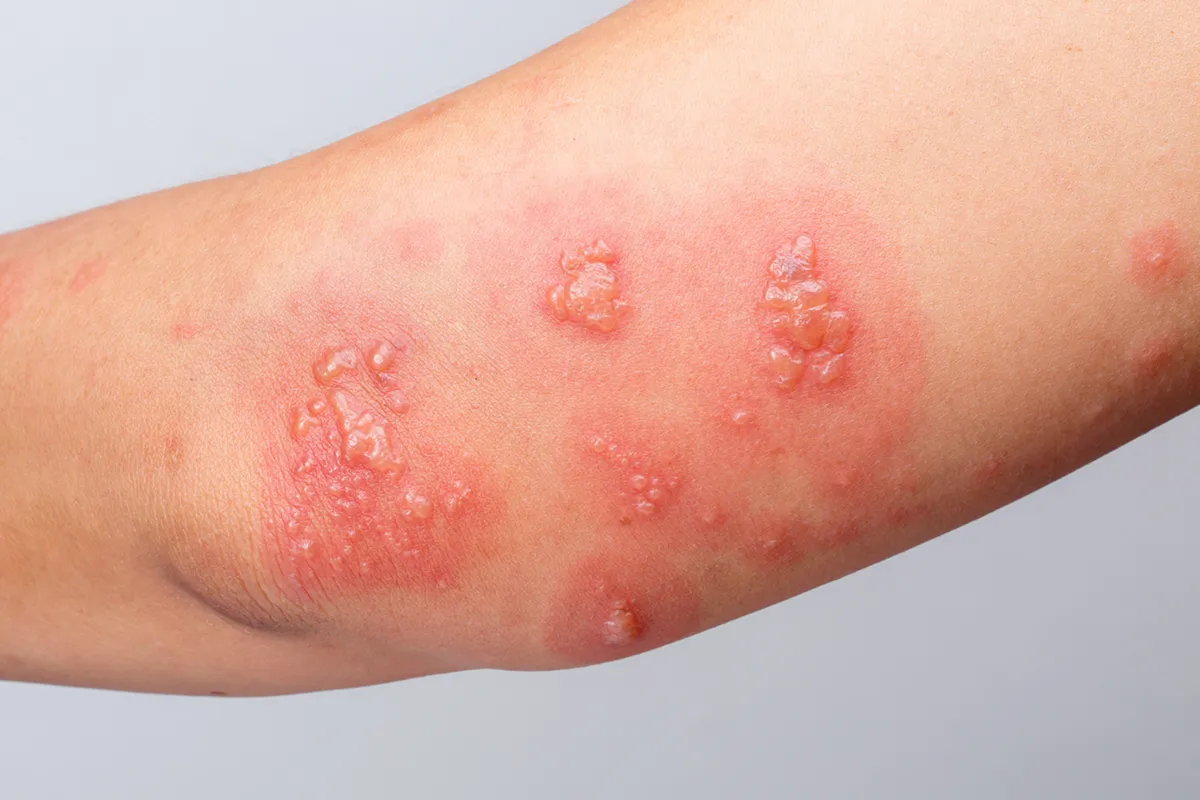
Shingles often begins with pain, tingling, itching or burning in a specific area of the skin, usually on one side of the body. This discomfort can start a few days before any rash appears and may feel sharp, stabbing or throbbing. A rash of small, fluid-filled blisters then develops in a band-like pattern, most commonly on the chest, back or side. The blisters burst, dry out and form scabs over several days. The area can be very painful and sensitive to touch, and some people may also feel unwell with tiredness, headache or a mild fever. Symptoms usually improve gradually, but the rash can take several weeks to fully heal.
Shingles is caused by a virus, and treatment works best when started as early as possible, ideally within 72 hours of the rash appearing. Under the Common Conditions Service, our pharmacists can assess and treat adults aged 18 years and over with shingles who meet specific criteria.
Our Pharmacists may be able to prescribe treatment where:
Treatment usually involves a prescription for antiviral medicine, which helps reduce the severity and duration of symptoms and lowers the risk of ongoing nerve pain. Pain relief is also important, and simple painkillers such as paracetamol or ibuprofen may be advised by our pharmacists, if suitable.
Some people will need referral to a GP or hospital for further assessment, including those who are pregnant or breastfeeding, those with a weakened immune system, or if the rash affects the eye or face, or if symptoms are severe or worsening.
Alongside antiviral treatment, the following self-care steps can help relieve symptoms and support healing:
Shingles is contagious until all blisters have crusted over (usually seven to ten days after rash appears). During this time, avoid close contact with:
Seek medical advice urgently if the rash is near the eye, if pain becomes severe, if new blisters keep appearing, or if you feel very unwell.